Audit the keys inside the real application
List every key and combination used in spreadsheets, accounting, point-of-sale, remote desktop, data entry, or accessibility workflows. Check decimal separator, plus, minus, multiply, divide, Enter, Tab, Backspace, 00 or 000, arrows, Home, End, and macros. A familiar keycap does not prove the application or operating system interprets it the same way.
Rule out operating-system mode conflicts
Microsoft and Apple both document that Mouse Keys can make the numeric keypad move the pointer instead of entering numbers. Test Num Lock or Clear behavior, login screens, remote sessions, accessibility settings, and sleep recovery on every required computer. Keep a written reset or pairing procedure where another keyboard is not available.
Choose connection by failure cost
Bluetooth avoids a receiver and may switch among several devices; 2.4 GHz uses a dedicated dongle; some pads add USB-C wired mode. Keychron's Q0 Max is one current example offering all three, but that does not make its heavy mechanical design necessary for ordinary data entry. Compare IT restrictions, available ports, radio congestion, charging during use, receiver replacement, firmware tools, and wired fallback.
Use the pad's mobility as the ergonomic feature
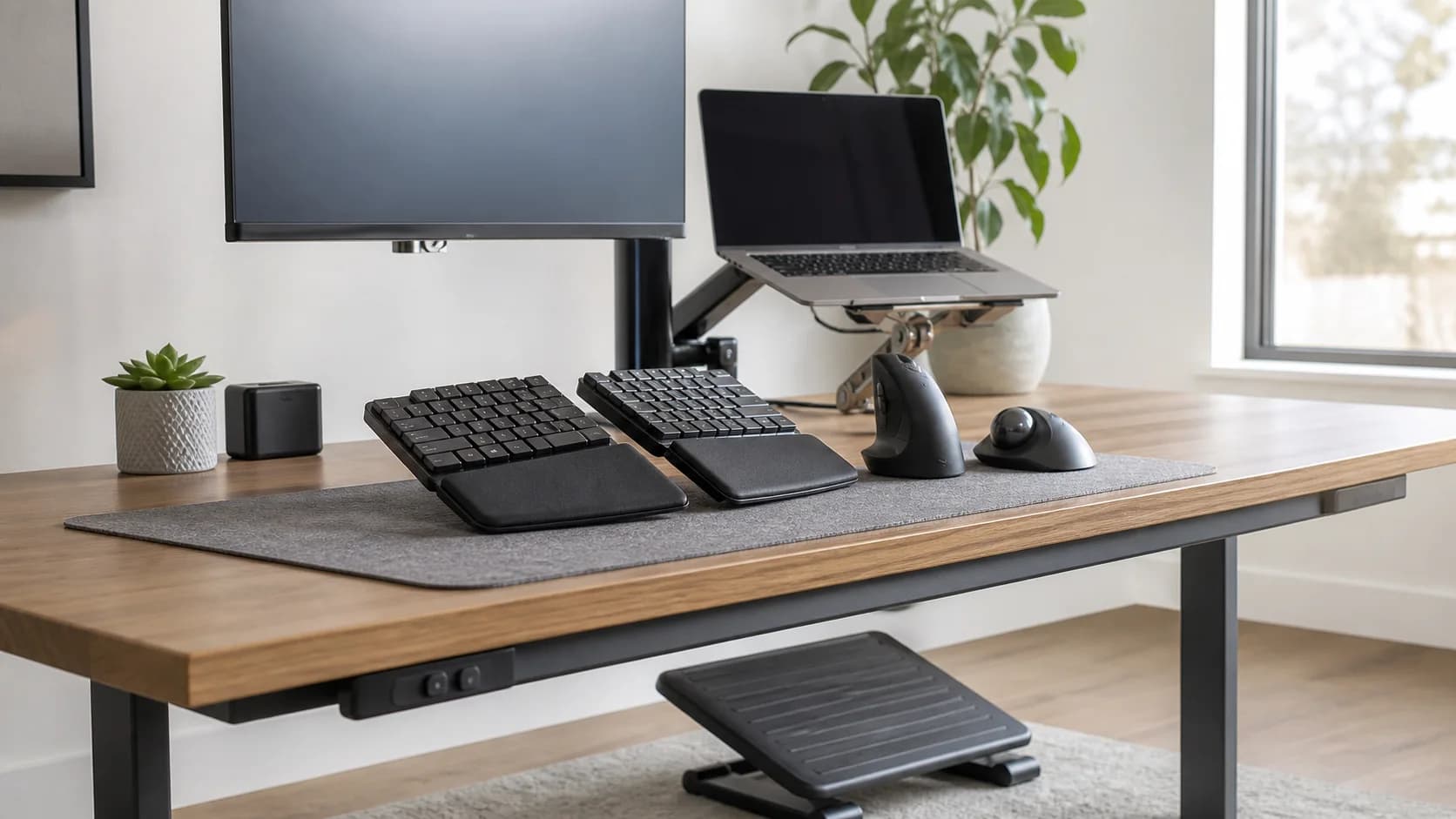
Place the pad on either side of the keyboard or move it away when not in use, keeping the mouse and forearm in a neutral reachable position. OSHA notes that removing a fixed ten-key section can create more mouse space. Test the pad on the actual desk for sliding, height mismatch, wrist angle, key force, sound, and repeated movement before keeping it.
Compare the alternatives: the decision
Wireless number pads are the stronger choice when their specialized path can add numeric entry only when a compact keyboard workflow needs it. Choose full-size keyboards when it reaches the same outcome with fewer fit, setup, or maintenance dependencies—especially when numeric entry is rare, separate wake and pairing adds friction, or a full-size keyboard would simplify the permanent desk.
Compatibility and fit: the decision
Compatibility passes only when all four checks are confirmed: standard number-pad layout and key size; Bluetooth or receiver connection; calculator, tab, backspace, and shortcut keys; left- or right-side placement and device switching. Verify the exact model and variant, then test the limiting condition before the return window closes.
Ownership cost and maintenance: the decision
Budget beyond checkout for battery, receiver loss, separate device switching, desk clutter, and layout differences from the main keyboard. The disciplined choice is the one that remains serviceable and recoverable after normal wear, cleaning, updates, consumables, or a failed part.
Setup and daily workflow: the decision
Use this order: pair it to the correct computer, place it on the side that reduces reach, test spreadsheet navigation, and confirm sleep-wake behavior. Keep the previous routine available until normal operation and a safe recovery test both work.