Deskwise Picks
Browse
Meetings

Desktop Laminators Buying Guide

Current retailer option

Amazon Basics 9-Inch Thermal Laminator Machine with Quick Warm-Up, 2 Heat Settings, Jam Release for Documents and Photos, White

Check current price & availability on Amazon

Current price & availability · purchase link

Open the exact family listing to compare the live price, availability, delivery, seller, and returns.

Choose a desktop laminator by the widest real document, required pouch thickness and finish, hot or cold material limits, batch frequency, warm-up and feed workflow, jam recovery, cooling space, and electrical safety.

Prepared by the Deskwise Picks editorial deskUpdated October 6, 2026

Quick answer

The practical answer

Buy for the document and pouch, not the machine's top speed. Match the widest item plus sealed margin to the entry width, then confirm the laminator explicitly supports the selected pouch thickness and hot or cold process. Thicker pouches add rigidity but can exceed a small machine's range. For a few occasional documents, self-adhesive cold pouches or a print shop may be simpler. For repeated batches, prioritize repeatable temperature selection, straight feeding, reverse or release, auto shutoff, and safe output space.

Complete topic guide

One page for the complete decision

Comparison, compatibility, ownership, maintenance, and setup guidance are now consolidated below. This keeps every useful check while removing separate pages that competed for the same family-level decision.

Common buying question

Which desktop laminators are worth buying when the real job is to seal frequently handled paper using a controlled pouch thickness and document size?

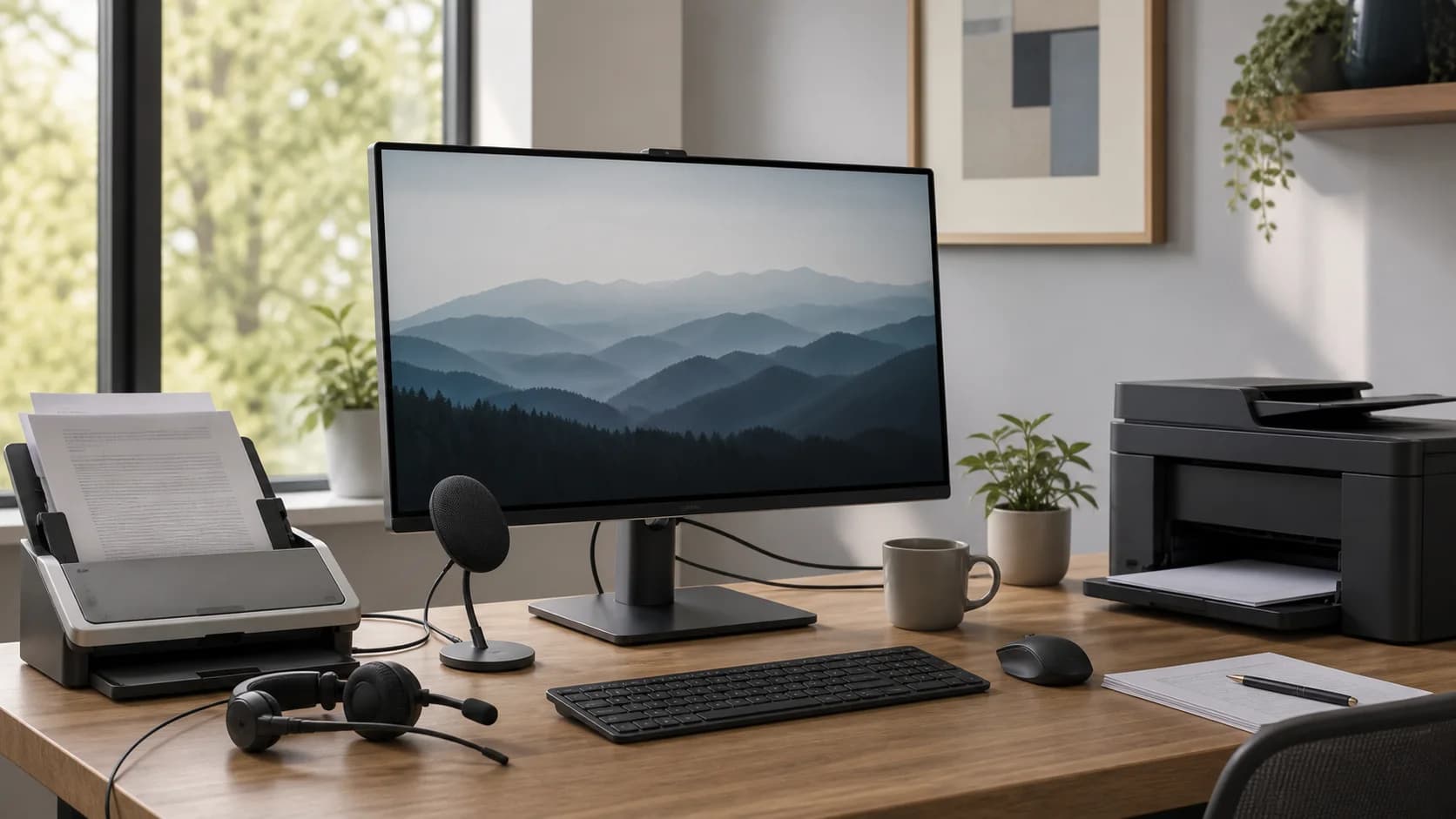
Original editorial scene with unbranded meeting, display, audio, scanning, and printing equipment
Original editorial image for category, fit, and use context; verify the exact linked product appearance and configuration on the retailer page.

Build a document-and-pouch matrix

List the largest width and length, thickness, finish, handling frequency, and whether the item is replaceable. Fellowes recommends choosing pouch size and thickness for the document and checking that the machine supports both. Leave the sealed margin required by the pouch instructions; an A4 or letter label alone does not prove an unusual card, folded item, or mounted piece will fit.

Treat pouch thickness as a machine limit

Pouch thickness is commonly stated per side in mil or microns, so confirm how both the pouch and machine express it. Thicker film can be more rigid but needs a compatible heat and feed setting. Use the exact recommended setting, allow the ready indication, insert the sealed edge first and straight, and do not improvise with layered pouches or materials the manual excludes.

Separate warm-up from batch throughput

Calculate the whole job: warm-up, setting changes, feed speed, cooling space, trimming, and recovery from a bad pouch. A fast warm-up does not prove sustained classroom or office batch capacity. For repeated work, check the stated usage level, auto shutoff, reverse or release control, and whether finished sheets can exit flat without stacking against a wall.

Protect originals and rehearse a jam

Scan or copy any valuable or irreplaceable item before processing, and test the pouch and settings with a disposable sample of the same material. Follow the exact release or reverse procedure without pulling against the rollers. Keep the unit dry, use an accessible outlet, preserve input and output clearance, and let hot pouches cool flat away from children and pets.

Compare the alternatives: the decision

Desktop laminators are the stronger choice when their specialized path can seal frequently handled paper using a controlled pouch thickness and document size. Choose protective sleeves when it reaches the same outcome with fewer fit, setup, or maintenance dependencies—especially when the original is heat sensitive or irreplaceable, required size exceeds the throat, or reusable sleeves meet the handling need.

Compatibility and fit: the decision

Compatibility passes only when all four checks are confirmed: maximum width; pouch thickness range; warm-up and feed speed; hot and cold modes, reverse, and jam release. Verify the exact model and variant, then test the limiting condition before the return window closes.

Ownership cost and maintenance: the decision

Budget beyond checkout for pouches, cleaning carriers, heat, storage, warm-up time, jam removal, and trimming without cutting the seal. The disciplined choice is the one that remains serviceable and recoverable after normal wear, cleaning, updates, consumables, or a failed part.

Setup and daily workflow: the decision

Use this order: match pouch and document, preheat fully, feed the sealed edge straight with clearance behind the machine, and test a disposable sample. Keep the previous routine available until normal operation and a safe recovery test both work.

Current Amazon option

Check this exact product

Amazon Basics 9-Inch Thermal Laminator Machine with Quick Warm-Up, 2 Heat Settings, Jam Release for Documents and Photos, White

ASIN
B09RBHPLB7
Brand
Amazon Basics
Listing checked
8/9/2026

Compare the current title, ASIN, variant, seller, stock, shipping, price, and return path before ordering.

Side-by-side checks

Pick the process before the laminator

CheckHot pouch laminatorCold-capable laminator or cold pouchPrint shop or no lamination
Best fitRepeat documents needing compatible clear sealed protectionHeat-sensitive material or occasional adhesive filmRare, oversize, specialist, or easily replaced items
VerifyEntry width, pouch mil, temperature, speed, rollers, reverseCold setting, exact pouch instructions, pressure, bubblesTurnaround, finish, document value, replacement path
Recurring workWarm-up, carriers if required, cleaning, cooling and storageAlignment, pressure, adhesive handling and trimmingOrdering, travel or service cost
Stop signalWrinkle, clouding, stalled pouch, odor, damaged cable, unsafe heatBubbles, lifting edges, incompatible surfaceOriginal is irreplaceable or process is not authorized

Primary sources

References used for this guide

Research notes

How we evaluated these choices

  1. 1.Official-spec document-and-pouch worksheet. No warm-up, throughput, seal, temperature, jam, or durability test is claimed for the marketplace anchor.
  2. 2.Define one independent purchase or use question for this URL.
  3. 3.Verify the four family-specific dimensions: maximum width; pouch thickness range; warm-up and feed speed; hot and cold modes, reverse, and jam release.
  4. 4.Use an exact Amazon ASIN only as a current retailer identity and checkout anchor, not as hands-on evidence.
  5. 5.Do not add a community claim when no sufficiently relevant public discussion was found.
  6. 6.Keep a written stop condition and a reversible test path.

Related guide

Video Call Setup Guide for Home Offices

A practical path to better Zoom, Meet, and Teams calls using light placement, camera height, audio basics, and desk layout.

Related guide

USB Switch vs. KVM vs. Dock for Two Computers

Choose the device by what must move between computers: peripherals, displays, charging, Ethernet, or the entire desk.

Related guide

USB Speakerphone vs. Headset for Video Meetings

Choose by room occupancy, privacy, background noise, comfort, pickup distance, and whether several people need one audio device.

Related guide

DP Alt Mode Driver vs DisplayLink: Portable Monitor Guide

Work out whether your portable monitor needs native DisplayPort video, a DisplayLink driver, or HDMI before replacing cables or installing software.

Related guide

Monitor-Mounted Key Light vs. Desk Lamp for Video Calls

Choose the fixture by camera axis, face distance, desk depth, monitor strength, task-light needs, cable path, and the amount of room light it must overcome.

Related guide

Key Light Placement for Glasses: Reduce Video-Call Glare

Move the light, camera, screen, and glasses angle before buying a brighter panel; use a repeatable placement test that preserves eye light without reflecting a white rectangle.

Related guide

Business USB-C Monitors vs. monitors plus a separate dock

Compare a USB-C hub monitor with a separate dock by host video support, charging wattage, USB and Ethernet needs, second-monitor topology, desk ownership, and replacement risk.

Related guide

Ultrawide Office Monitors Buying Guide

Which ultrawide office monitors are worth buying when the real job is to replace two display workspaces with one wide canvas and fewer bezel interruptions? This guide turns that question into model-level checks, a reversible setup, a first-year ownership plan, and a clear skip decision.