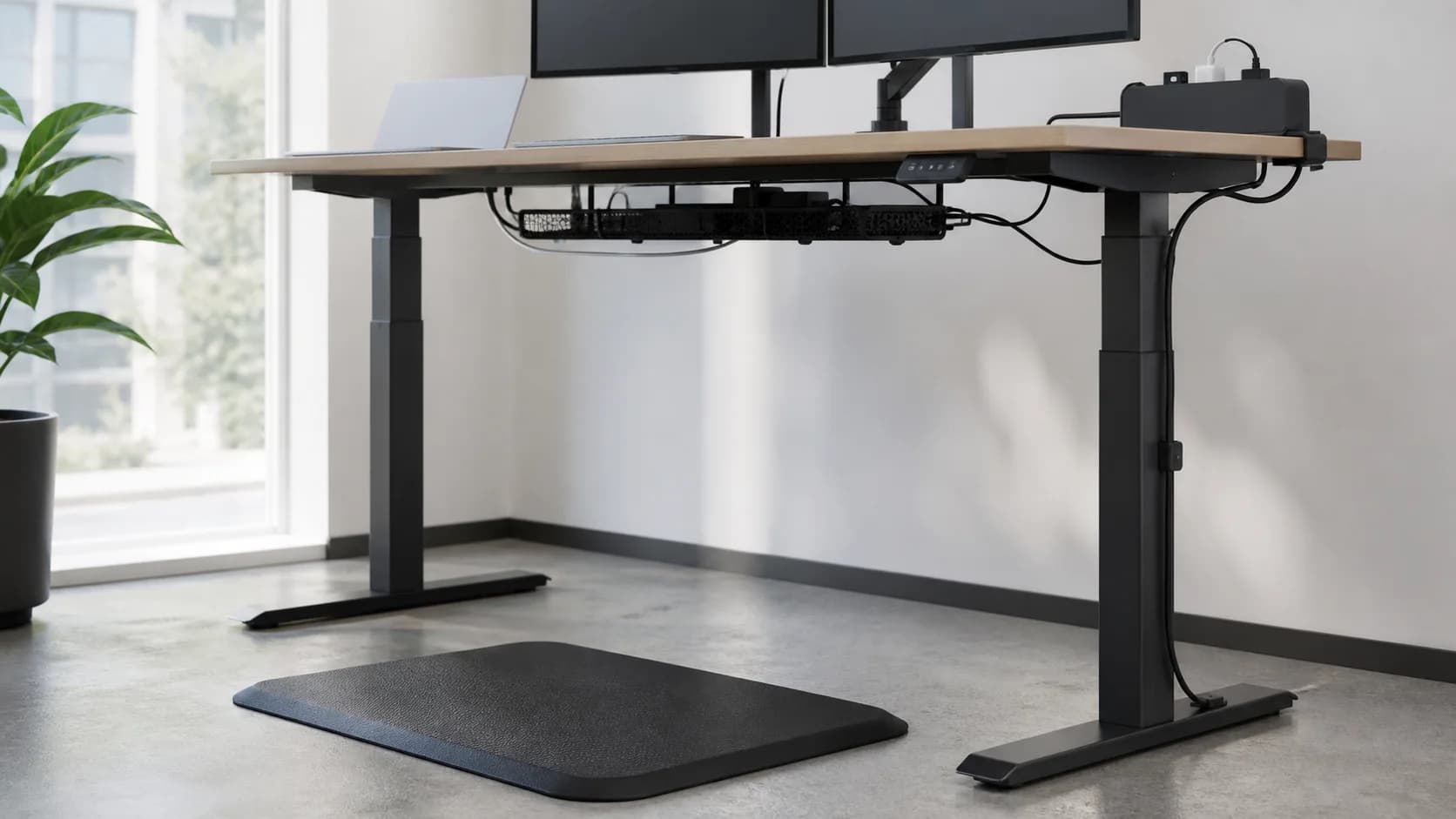
Build the cost beyond checkout
Normal ownership includes surface cleaning, edge curling, compression, storage, and clearing it from rolling-chair routes. Put those items beside the purchase price before comparing products, then add cables, adapters, software, replacement parts, consumables, warranty handling, power, and the cost of returning a poor fit and the cost of downtime.
Maintenance starts with mat size and edge profile and firmness and rebound
For standing-desk anti-fatigue mats, mat size and edge profile and firmness and rebound are not only buying checks; they determine what must be inspected, cleaned, updated, calibrated, charged, or replaced. Confirm that service points remain reachable after installation and that parts are sold for the exact model rather than only for a similar family name.
Watch chair-roll and storage path and surface traction, shoes, and trip risk over the first year
Record the standing-desk anti-fatigue mats baseline for chair-roll and storage path and surface traction, shoes, and trip risk after setup and check it after ordinary use. Ownership problems are easier to catch when settings, measurements, supply part numbers, and photos are documented before wear, firmware changes, seasonal conditions, or a different user changes the result.
Price failure and recovery
For standing-desk anti-fatigue mats, ask what happens after loss of power, video, USB, network, driver support, saved settings, a consumable, or an adjustable part. Keep the instructions, warranty, exact product identity, data-removal steps where applicable, and a practical fallback. The previous supportive indoor shoes or movement breaks routine should remain available until recovery is proven.
Know the economic stop point
Exit when the mat creates a trip edge, cannot move out of the chair path, or it is being used to justify long motionless standing. Also stop spending when recurring parts, service, cleaning, or recovery work exceeds the value of the repeated job. A familiar alternative is often cheaper than extending ownership of a mismatched specialized product.