Deskwise Picks
Browse
Meetings

Sheet-fed Document Scanners: Setup and Daily Workflow

Current retailer option

Plustek Mobile Scanner S410 Plus - Portable Sheet-Fed Document Scanner - for Windows 7 / 8 / 10 / 11, Featuring Button-Free Scanning with Included OCR Software | Support Windows 7 / 8 / 10 / 11, Featuring Button-Free Scanning with Included OCR Software. USB Powered

Check current price & availability on Amazon

Current price & availability · purchase link

Open the exact family listing to compare the live price, availability, delivery, seller, and returns.

A direct workflow answer for sheet-fed document scanners: decide whether the product can turn recurring stacks of loose paper into searchable files quickly, verify all four model-level conditions, and keep the choice reversible when most documents are bound, fragile, or oversized, volume is occasional, or a phone and existing multifunction printer already cover the workflow.

Prepared by the Deskwise Picks editorial deskUpdated August 27, 2026

Quick answer

The practical answer

Set up sheet-fed document scanners in this order: define file naming and destination first, test mixed paper, tune OCR, and scan a small batch before feeding important originals. Put duplex speed and automatic feeder capacity and receipt, card, and paper-size support on the installation checklist, then build the repeatable routine around OCR and destination workflow and roller access, misfeed detection, and driver support. Revert if most documents are bound, fragile, or oversized, volume is occasional, or a phone and existing multifunction printer already cover the workflow.

Common buying question

How should sheet-fed document scanners be set up and used without adding a new daily chore?

This URL answers the workflow decision and does not substitute for the sibling buying, comparison, fit, ownership decisions.

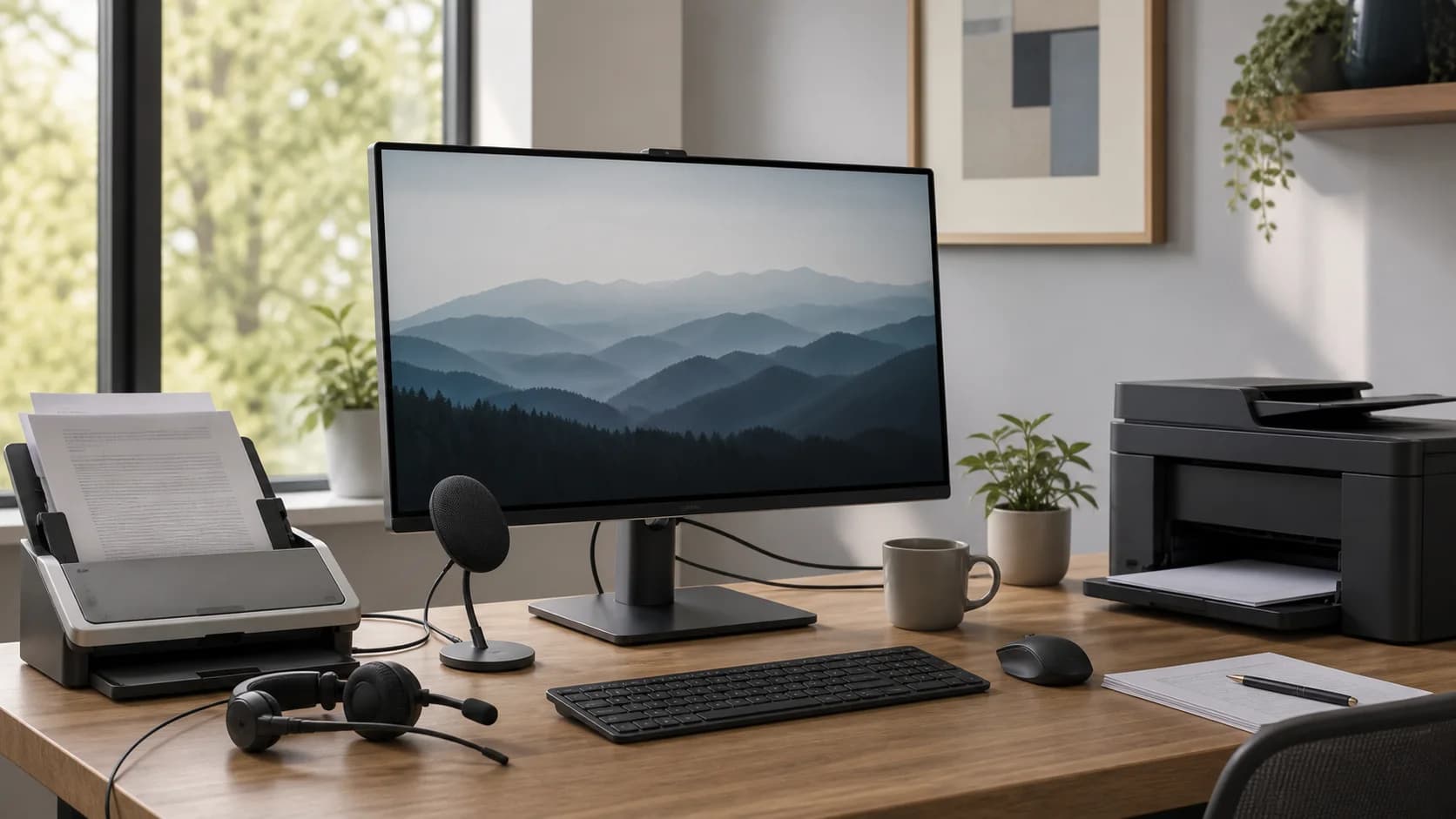
Original editorial scene with unbranded meeting, display, audio, scanning, and printing equipment
Original editorial image for category, fit, and use context; verify the exact linked product appearance and configuration on the retailer page.

Sheet-fed document scanners: day one, normal week, and recovery test

Day one follows this sequence: define file naming and destination first, test mixed paper, tune OCR, and scan a small batch before feeding important originals. During a normal week, record whether duplex speed and automatic feeder capacity, receipt, card, and paper-size support, OCR and destination workflow, and roller access, misfeed detection, and driver support remain understandable and repeatable for the actual user. Before retiring the old routine, test a safe recovery from one plausible failure. The workflow fails when most documents are bound, fragile, or oversized, volume is occasional, or a phone and existing multifunction printer already cover the workflow.

Stage setup before changing the routine

Use this order: define file naming and destination first, test mixed paper, tune OCR, and scan a small batch before feeding important originals. Complete the first setup while there is time to read, observe, and reverse decisions. Add one device, user, animal, automation, accessory, or workflow step at a time so the cause of a failure remains visible.

Put duplex speed and automatic feeder capacity and receipt, card, and paper-size support into the setup checklist

Verify duplex speed and automatic feeder capacity and receipt, card, and paper-size support for the selected sheet-fed document scanners in the real environment and record the result. The routine should not depend on remembering a hidden app state, unsupported adapter, special handling step, or unlabelled configuration that another household member cannot recover.

Design daily use around OCR and destination workflow and roller access, misfeed detection, and driver support

For sheet-fed document scanners, write the few actions that should occur every day or week around OCR and destination workflow and roller access, misfeed detection, and driver support. Include cleaning, charging, refilling, data review, physical inspection, or supervision where relevant. If those actions are harder than the previous flatbed scanners or multifunction printers routine, the new product has not removed the original friction.

Test recovery deliberately

For sheet-fed document scanners, safely simulate the most plausible ordinary failure created by the ownership path: loss of power, video, USB, network, driver support, saved settings, a consumable, or an adjustable part. Confirm the relevant alerts, manual controls, saved settings, physical checks, and exact steps needed to resume the routine without creating a second problem.

Review after a normal week

Compare time saved, new chores, reliability, user or animal response, and maintenance. Revert when most documents are bound, fragile, or oversized, volume is occasional, or a phone and existing multifunction printer already cover the workflow. Keep the workflow only if it solves the original job and remains understandable to the people who must use and recover it.

Current Amazon option

Check this exact product

Plustek Mobile Scanner S410 Plus - Portable Sheet-Fed Document Scanner - for Windows 7 / 8 / 10 / 11, Featuring Button-Free Scanning with Included OCR Software | Support Windows 7 / 8 / 10 / 11, Featuring Button-Free Scanning with Included OCR Software. USB Powered

ASIN
B09LD2SXWC
Brand
plustek
Listing checked
8/9/2026

Compare the current title, ASIN, variant, seller, stock, shipping, price, and return path before ordering.

Side-by-side checks

Workflow checks that change the sheet-fed document scanners decision

CheckWhat to verifyDecision effect
Decision 1duplex speed and automatic feeder capacityTreat any unanswered question about duplex speed and automatic feeder capacity as a reason to pause rather than assume fit.
Decision 2receipt, card, and paper-size supportTreat any unanswered question about receipt, card, and paper-size support as a reason to pause rather than assume fit.
Decision 3OCR and destination workflowTreat any unanswered question about OCR and destination workflow as a reason to pause rather than assume fit.
Decision 4roller access, misfeed detection, and driver supportTreat any unanswered question about roller access, misfeed detection, and driver support as a reason to pause rather than assume fit.
Setup proofdefine file naming and destination first, test mixed paper, tune OCR, and scan a small batch before feeding important originalsComplete this path before retiring the previous routine or equipment.
Exit conditionmost documents are bound, fragile, or oversized, volume is occasional, or a phone and existing multifunction printer already cover the workflowUse flatbed scanners or multifunction printers or keep the current setup when this condition applies.

Primary sources

References used for this guide

  • OSHA Computer Workstations eTool

    Authoritative workstation layout and equipment-fit baseline. Verify the exact product instructions and current listing separately.

How this page was governed

Page-specific editorial method

  1. 1.Define one independent purchase or use question for this URL.
  2. 2.Verify the four family-specific dimensions: duplex speed and automatic feeder capacity; receipt, card, and paper-size support; OCR and destination workflow; roller access, misfeed detection, and driver support.
  3. 3.Use an exact Amazon ASIN only as a current retailer identity and checkout anchor, not as hands-on evidence.
  4. 4.Do not add a community claim when no sufficiently relevant public discussion was found.
  5. 5.Keep a written stop condition and a reversible test path.

Related guide

Sheet-fed Document Scanners Buying Guide

Which sheet-fed document scanners are worth buying when the real job is to turn recurring stacks of loose paper into searchable files quickly? This guide turns that question into model-level checks, a reversible setup, a first-year ownership plan, and a clear skip decision.

Related guide

Sheet-fed Document Scanners vs. flatbed scanners or multifunction printers

A direct comparison answer for sheet-fed document scanners: decide whether the product can turn recurring stacks of loose paper into searchable files quickly, verify all four model-level conditions, and keep the choice reversible when most documents are bound, fragile, or oversized, volume is occasional, or a phone and existing multifunction printer already cover the workflow.

Related guide

Sheet-fed Document Scanners: Compatibility and Fit Guide

A direct compatibility answer for sheet-fed document scanners: decide whether the product can turn recurring stacks of loose paper into searchable files quickly, verify all four model-level conditions, and keep the choice reversible when most documents are bound, fragile, or oversized, volume is occasional, or a phone and existing multifunction printer already cover the workflow.

Related guide

Sheet-fed Document Scanners: Ownership Cost and Maintenance

What will sheet-fed document scanners cost and require after checkout? This guide turns that question into model-level checks, a reversible setup, a first-year ownership plan, and a clear skip decision.

Related guide

Video Call Setup Guide for Home Offices

A practical path to better Zoom, Meet, and Teams calls using light placement, camera height, audio basics, and desk layout.

Related guide

USB Switch vs. KVM vs. Dock for Two Computers

Choose the device by what must move between computers: peripherals, displays, charging, Ethernet, or the entire desk.

Related guide

USB Speakerphone vs. Headset for Video Meetings

Choose by room occupancy, privacy, background noise, comfort, pickup distance, and whether several people need one audio device.

Related guide

DP Alt Mode Driver vs DisplayLink: Portable Monitor Guide

Learn why DP Alt Mode normally has no separate driver download, when DisplayLink software is required, and how to verify USB-C video, power, HDMI, cable, and host support before buying a portable monitor.

Sheet-fed Document Scanners: Setup and Daily Workflow