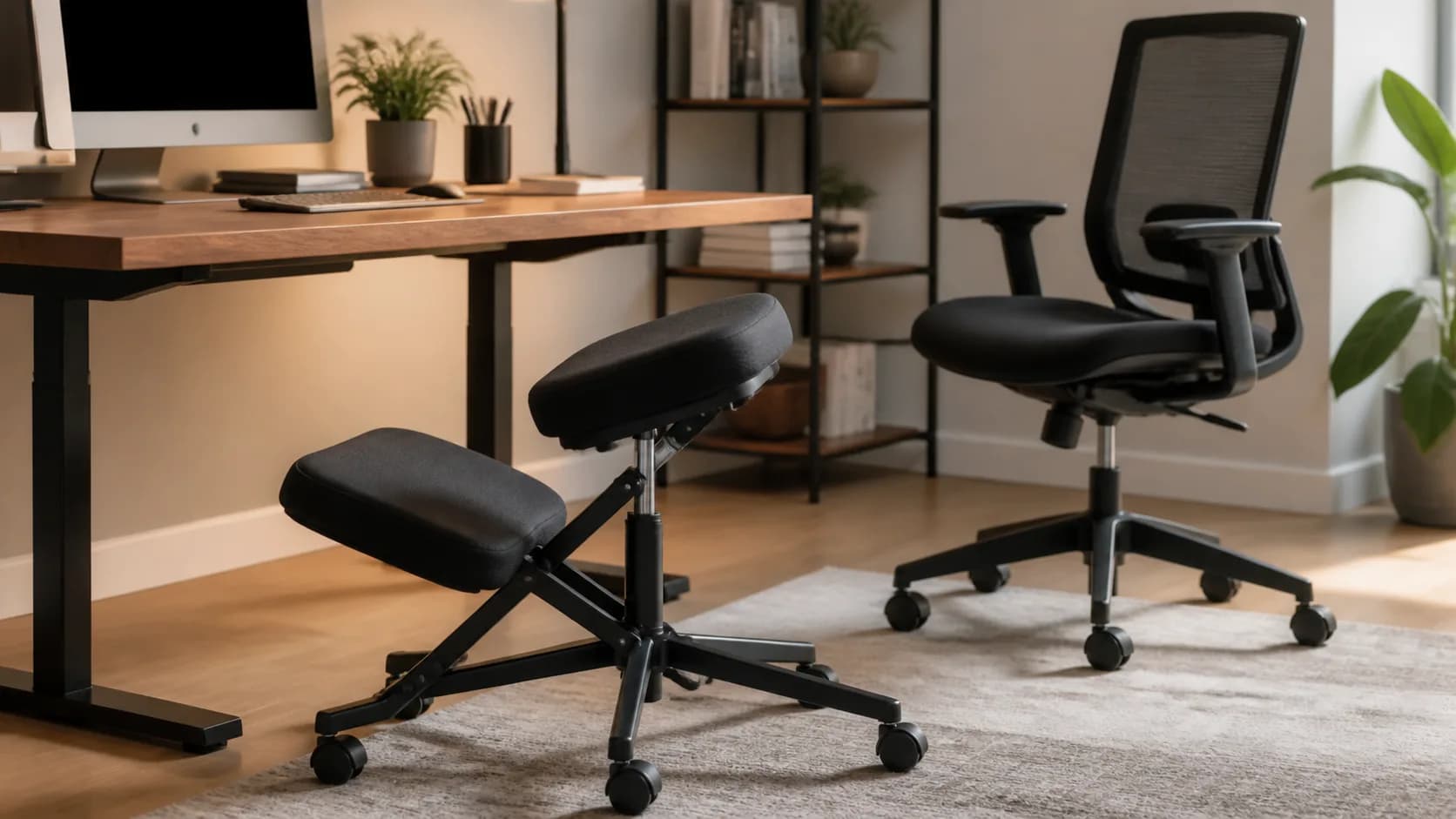
Decide whether an alternate seat is useful
A kneeling chair changes how the seat and shin pads share support. It does not remove the need to adjust the desk, keyboard, monitor, breaks, or total sitting time. Define the task and duration it might serve, and keep the current chair available rather than expecting one unfamiliar position to solve discomfort.
Fit the user and desk together
Check user height, body proportions, stated load limit, seat height and angle range, distance to shin pads, foot clearance, desk underside, keyboard height, and monitor line of sight. Shared workstations need an adjustment process that each user can repeat. A broad height claim is weaker than dimensions and a reversible trial.
Pay attention to pressure and transitions
Support should contact the shins rather than concentrate force on the kneecaps. Stop for pain, numbness, swelling, instability, or difficulty standing. People with relevant joint, circulation, balance, mobility, pregnancy, or medical concerns should seek appropriate professional guidance instead of treating marketing language as an assessment.
Inspect frame, wheels, and assembly
Compare frame stiffness, base footprint, fasteners, pad attachment, caster behavior or rocking arc, floor protection, pinch points, and movement under the desk. Retighten only as the manual specifies. A rolling base may ease entry but should not slide unpredictably when weight transfers to it.
Use it as part of position variety
Begin with short, comfortable sessions and rotate among sitting, standing, and movement according to the user's response. Skip the category when desk height cannot be corrected, shin pressure remains uncomfortable, safe entry is difficult, or the return policy does not permit a meaningful home trial. Comfort is individual evidence, not a cure claim.